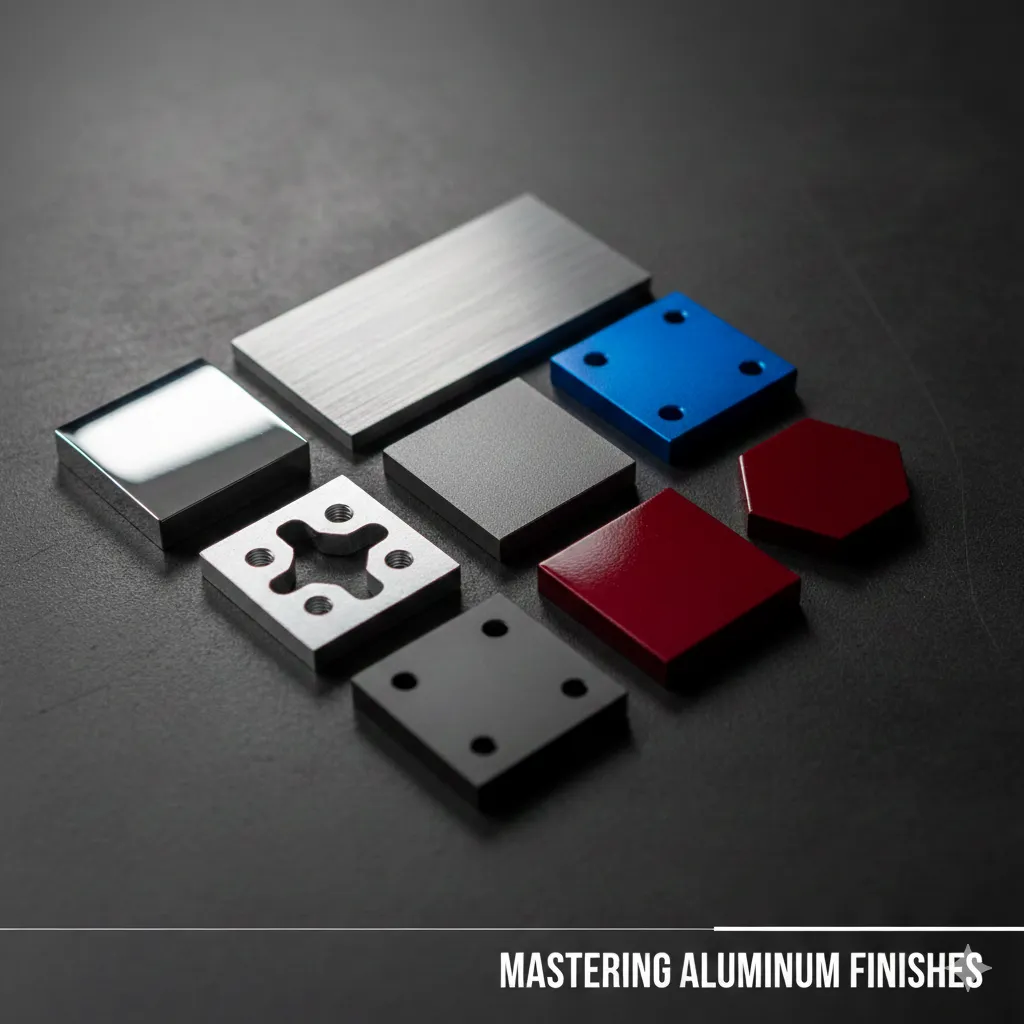
In a machine shop, the difference between a "part" and a "product" often comes down to the finish. Achieving a professional, high-end look on aluminum isn't just about hiding tool marks; it’s about choosing the right process to enhance the material's natural beauty.
1. Mechanical Finishes: The Foundation
Mechanical finishing relies on physical abrasion to level the surface and create a specific texture.
Polishing & Buffing
For that "mirror" look, nothing beats a multi-stage buffing process.
- The Look: High-reflectivity, deep shine, jewelry-like quality.
- Best For: Display pieces, automotive trim, and luxury goods.
- Pro Tip: Always start with a consistent wet sand (up to 800 grit) before moving to the buffing wheel.
Bead Blasting
This involves firing small glass beads at the surface at high pressure.
- The Look: A soft, satin, non-reflective matte finish. It is excellent at hiding minor machining "chatter" or scratches.
- Best For: Industrial electronics and "tactical" gear.
- Note: Glass beads provide a smoother satin finish than sand or aluminum oxide, which can look "grey" and dull.
2. Chemical & Electrochemical Finishes
These processes change the surface of the aluminum at a molecular level, offering the most "professional" industrial appearance.
Anodizing (Type II & Type III)
Anodizing is the industry standard for aluminum aesthetics. It converts the surface into a durable, porous oxide layer.
- The Look: Can be Clear (metallic silver) or Brightly Colored (reds, blues, golds).
- Durability: Extremely scratch-resistant and will never peel or flake.
- Resource: Learn more about the Anodizing Process
Electropolishing
Think of this as "reverse plating." It removes a microscopic layer of material.
- The Look: Ultra-clean, bright, and smooth. It enhances the luster of the base metal without the manual labor of hand buffing.
3. Comparison Table: At a Glance
| Method | Visual Style | Cost (Low-High) | Durability | Best Aesthetic Use |
|---|---|---|---|---|
| Bead Blasting | Satin / Matte | Low | Medium | Hiding tool marks |
| Brushing | Linear Grain | Medium | Medium | Modern/Industrial look |
| Polishing | Mirror Shine | High | Low | Showpieces |
| Anodizing | Metallic Color | Medium | High | Branding & Color Coding |
| Powder Coating | Solid/Textured | Low-Medium | Very High | Bold colors/Large parts |
4. Modern Coatings
If you want to deviate from the "metallic" look, coatings offer the most variety.
- Powder Coating: Offers thick, vibrant colors and textures (like "wrinkle" or "sand" finishes). Great for covering up casting defects.
- Cerakote: A ceramic-based thin-film coating. It provides a premium, "flat" look that is incredibly popular in the automotive industry.
- Example Gallery: Cerakote Project Gallery
Summary: Which should you choose?
- For a "Tech" look: Bead blast followed by a Clear Anodize.
- For a "Luxury" look: Hand polish to a mirror finish.
- For "Durability + Color": Type II Anodizing or Cerakote.